
Shaping the Future of Learning: International Perspectives on Management Education in Transition (Spring 2026) – ENGAGE.EU Signature Course
| Lecturer | Dr. Christian Mayer, Prof. Dr. Jürgen Seifried (University of Mannheim), Prof. Dr. Bettina Fuhrmann (Vienna University of Economics and Business – WU), tbd (University of St. Gallen) |
| Course Format | Elective (Mannheim / St. Gallen); Mandatory (WU Vienna) |
| Course Credit | 5 ECTS (University of Mannheim); 4 ECTS (WU Vienna); 4 ECTS (University of St. Gallen) |
| Language | English |
| Assessment | Interim feedback round, final group presentation, project paper, participation |
| Restricted access | yes (limited seminar capacity) |
Contents
“Shaping the Future of Learning” is an ENGAGE.EU Signature Course jointly offered by the University of Mannheim, WU Vienna, and the University of St. Gallen. The course addresses current transformations in management education, corporate learning, and business education against the backdrop of technological, pedagogical, and societal change.
Students analyze and compare concepts such as digital and hybrid learning architectures, AI-supported teaching and assessment, competency-based curricula, micro-credentialing, lifelong learning pathways, and institutional changes in higher and corporate education systems.
Working in international, cross-university groups, students conduct small research projects on selected contemporary challenges in management education. They develop research questions, apply suitable methodological approaches, present interim findings, and synthesize insights for their final presentation. The course thereby strengthens both academic research skills and intercultural collaboration competencies.
The seminar integrates:
- methodological inputs on educational research and data analysis,
- international teamwork supported by digital collaboration platforms,
- opportunities for consultation and individual coaching,
- structured interim feedback rounds, and
- guided reflection on the implications of research findings for the future of learning.
Course Outline
The seminar is structured into three collaborative international learning (COIL) sessions conducted in a hybrid format (each 180 minutes) where students and lectures of the participating universities meet online. These three COIL sessions are complemented by group work phases and optional coaching meetings.
Session 1 – Introduction & Research Design (6th March 2026)
- Welcome and course introduction
- Input: Current transitions in management and business education
- Methodological input: Designing educational research projects
- Formation of international working groups
- Topic identification and refinement
Session 2 – Interim Presentation & Methodological Deep Dive (17th April 2026)
- Interim group presentations on research progress
- Feedback and discussion across institutions
- Additional methodological input: preparing and visualizing research results; academic writing
- Work on the research design
Session 3 – Final Presentations & Reflection (29th May 2026)
- Final group presentations of research findings
- Feedback from instructors and peers
- Reflective session: insights, implications, and future directions
- Information about optional individual coaching/
consultation meetings
Additional consultations with instructors (e.g., via virtual campus at WU) are available.
Learning Outcomes
Upon successful completion of the seminar, students will be able to:
- Analyze current international developments and trends in management, business, and corporate education.
- Design and conduct small research projects, including topic identification, research-question formulation, and selection of appropriate methods.
- Synthesize empirical findings and critically interpret their implications for educational practice in universities and corporate learning environments.
- Develop evidence-informed recommendations for shaping the future of learning.
- Collaborate effectively in international teams using digital tools and intercultural communication strategies.
- Present research results clearly, academically, and professionally.
Prerequisites
There are no formal prerequisites, except for the respective application/
A background in business education, management studies, or related fields is helpful. Prior experience with academic writing or empirical methods is advantageous but not required.
Registration & Application
(Details differ by university; apply via your home institution.)
University of Mannheim
- Registration via Portal2 (general university deadlines apply)
- Course capacity: 10–15 students (per program)
- Deregistration rules follow Portal2 guidelines
WU Vienna
- Mandatory seminar within the Master in Economic and Business Education
- Registration via WU procedures (see WU website)
- Expected capacity: 20–25 students
University of St. Gallen
- Elective seminar within the Master in Economic and Business Education
- Registration via St. Gallen course booking system
- Expected capacity: 10–15 students
Please refer to your home university’s website for the exact process, deadlines, and applicable regulations.
Attendance
Attendance is mandatory at all three COIL block sessions.
Students must attend the sessions online (medical exceptions possible). Zoom links and exact technical arrangements will be announced in advance.
Place and Time
(Provisional; subject to change until end of HWS 2025)
- Session 1: 6th March 2026 (1:00 – 5:30 pm)
- Session 2: 17th April 2026 (1:00 – 5:30 pm)
- Session 3: 29th May 2026 (1:00 – 5:30 pm)
Zoomlinks will be published via the respective university systems.
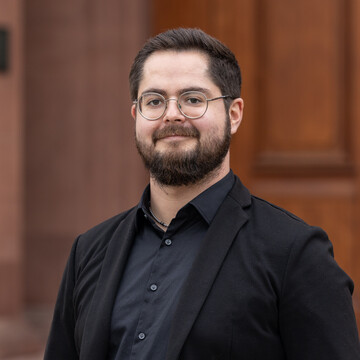
Dr. Christian Mayer
L 4, 1 – Raum 303 B
68161 Mannheim

Prof. Dr. Jürgen Seifried
L 4, 1 – Raum 304
68161 Mannheim