
Master-Seminar
IS 712 für Master Studierende (MMM und Wirtschaftsinformatik) / IS 918 (MMBR)
Allgemeines
| Durchführender Dozent | Mechthild Pieper |
|---|---|
| Prüfer | Prof. Dr. Armin Heinzl |
| Veranstaltungsart | Seminar |
| Leistungspunkte | 6 ECTS (MMM), 4 ECTS (WI ab HWS 2013) |
| Sprache | Englisch |
| Prüfungsform und -umfang | Seminararbeit (70%), Präsentation (20%), Diskussionsbeitrag (10%) |
| Prüfungstermin | Siehe Infos zur Veranstaltung |
| Infos für Studierende | Registrierung: Bitte beachten Sie unten stehende Informationen! |
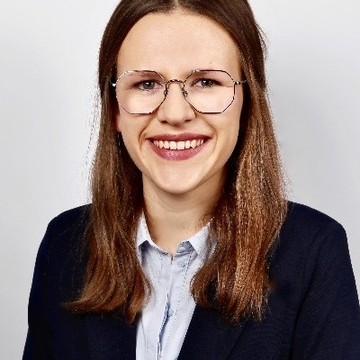
Dr. Mechthild Pieper
Ansprechpartner Master-Seminar
Bei Fragen wenden Sie sich bitte an Mechthild Pieper.
Infos zur Veranstaltung
New Frontiers in Digital Transformation
Kurzbeschreibung
Digitale Technologien und die ständig wachsende Datenmenge verändern unser tägliches Leben und die Wirtschaft radikal. Digitale Technologien, die in den Kern der Produkte, Abläufe und Strategien vieler Unternehmen eingebettet sind, führen in allen Branchen zu einer raschen Umgestaltung bestehender Unternehmen. Rund um die Nutzung dieser digitalen Technologien entstehen neue Marktangebote, Geschäftsprozesse und Geschäftsmodelle, die zu digitalen Innovationen führen1. Die Allgegenwärtigkeit digitaler Technologien verändert unser Verständnis von Informationssystemen (IS) grundlegend, insbesondere im Hinblick auf ihre Entwicklung, Koordination, Nutzung und die Art und Weise, wie wir mit ihnen interagieren. An unserem Lehrstuhl bieten wir ein breites Spektrum an Forschungsthemen im Bereich der Informationssysteme an, wobei wir uns auf neue digitale Technologien wie künstliche Intelligenz (KI) und maschinelles Lernen (ML) konzentrieren. In unserer Forschung nehmen wir die Perspektiven der Mensch-Computer-Interaktion, des Systemdesigns, der Wertschöpfung oder der Organisation ein.
In unserem Seminar werden wir die Gestaltung digitaler Technologien sowie deren Auswirkungen auf Individuen und Organisationen untersuchen. Dabei verknüpfen wir die angebotenen Themen mit unserer laufenden Forschung, die in führenden internationalen Zeitschriften veröffentlicht wurde und wird.
1. Nambisan, S., Lyytinen, K. & Yoo, Y. Handbook of Digital Innovation. 2–12 (2020) doi:10.4337/9781788119986.00008.
Möchten Sie mehr über digitale Innovation erfahren? Werfen Sie einen Blick auf unseren Masterkurs IS 607 (https://www.bwl.uni-mannheim.de/en/heinzl/teaching/digital-innovation/) und/
oder sehen Sie Nambisan, S., Lyytinen, K. & Yoo, Y. Handbook of Digital Innovation, (2020), doi:10.4337/9781788119986. Ziel des Seminars
In diesem Seminar erwerben Sie die Fähigkeit, vorhandene Forschung zu identifizieren, einzuordnen und zu bewerten. Sie lernen, ein eigenes Forschungsprogramm zu entwickeln sowie dieses zu präsentieren und mit den Seminarteilnehmern zu diskutieren. Sie werden in verschiedenen Techniken des wissenschaftlichen Arbeitens und Schreibens unterrichtet, so dass Sie optimal auf die Konzeption und das Verfassen Ihrer Masterarbeit vorbereitet werden. Wir bieten verschiedene Themenbereiche an, die hoffentlich Ihr Interesse wecken.
HWS 2026
Registrierung
Die Registrierung erfolgt ausschließlich über das Online-Registrierungsportal (erreichbar innerhalb des Uni-Netzwerkes oder über VPN). Während des Registrierungszeitraums können Sie das Seminar im Anmeldeformular auswählen.
Registrierungszeitraum: siehe Termine
Anforderungen:
- Kurzes formloses Motivationsschreiben (maximal 1 Seite):
Bitte wählen Sie ein Thema und begründen Sie Ihre Wahl, z. B. was Sie besonders interessiert und was Sie lernen möchten. Bitte geben Sie auch zwei alternative Themen an.
- Lebenslauf und Studienergebnisse (Notentranskript)
Es werden weder Registrierungen per E-Mail noch unvollständige Formulare im Registrierungstool berücksichtigt.
Themen (HWS 2026)
Die Studierenden werden gebeten, ein formloses Motivationsschreiben (maximal 1 Seite) zu verfassen, in dem Sie dieThemenauswahl darlegen und kurz begründen.Dieses Motivationsschreiben stellt neben dem Lebenslauf und dem Notentranskript eine wichtige Referenz für die Seminarzulassung dar.
Themengebiet Beschreibung Betreuer Emotion Data Analysis This seminar investigates users' emotional responses, measured through facial expression analysis, in interactions with a life-sized avatar. The work consists of a structured literature review on emotions in human–AI interaction, grounded in Information Systems and Human-Computer Interaction, and an empirical analysis of a dataset in which users interact with two life-sized avatars differing in appearance. Students are expected to synthesize and critically evaluate existing research, analyze differences in emotional reactions between the two avatar appearances, and explain where these differences originate. Bastian Schieck Agentic Creativity This seminar investigates the influence of AI agents and embodied avatars on human creativity, with a particular emphasis on whether such interactions inhibit or disinhibit creative performance and whether embodiment changes these effects and why. The work consists of a structured literature review grounded in Information Systems and Human-Computer Interaction. Students are expected to synthesize and critically evaluate existing research, identify gaps in the literature, and, building on these insights, design an experiment to test the effects of embodied agents on human creativity in collaboration. Bastian Schieck Data Ecosystems The growing integration and use of Generative AI (GenAI) in enterprise environments raises the demand for sharing domain-specific data that resides outside firm boundaries. Inter-organizational data sharing may become critical for realizing complex AI use cases. However, exchanging data across organizational boundaries introduces challenges regarding data sovereignty, intellectual property risks and potential loss of competitive advantage. While federated and regulatory initiatives (e.g., EU Data Spaces, EU Data Act, EU AI Act) aim at facilitating inter-organizational data exchange, their applicability, governance and scope require deeper investigation. In a seminar thesis within this topic area, students are expected to systematically review contemporary research on data ecosystems and regulatory initiatives and develop a conceptual study design to examine data sharing practices within predefined domains. Dr. André Halckenhäußer Case-Based Prediction, Metric Learning, Multimodal AI Retrieval-based classifiers can make prior cases the basis of a prediction: a query is compared to its nearest labelled neighbours, and their similarity determines the outcome. This promises explanations that are exact by construction, yet it raises technical questions. How should a similarity metric be learned so that retrieved cases remain recognizable to humans, how can image, text, and cross-modal interactions contribute separately to a comparison, and what predictive cost do such constraints impose compared to unconstrained deep fusion? This thesis should review metric learning and retrieval-based prediction approaches for multimodal data (e.g., frozen encoder features, learned projections, bilinear interaction models). Students should implement a small prototype comparing a retrieval-based classifier against a standard classifier on a multimodal benchmark, analysing the accuracy-interpretability trade-off, or conduct/ plan an experiment based on an existing solution. Solid coding skills are required. Florian Rüffer Case-Based Explanations, Retrieval-Based Prediction, XAI Explaining AI decisions through similar prior cases with known outcomes aligns with how humans naturally reason: by analogy and comparison rather than through abstract feature weights. However, how case-based explanations and their attributes actually affect human reasoning remains an open question. Which properties of presented cases (e.g., similarity, number, contrast between outcomes, richness of detail) help users assess AI advice, and which merely increase persuasion and over-reliance? This thesis should review empirical research on how case-based explanations influence human judgement, trust, and decision performance in AI-assisted settings. Students should synthesize findings into a framework of explanation attributes and their cognitive effects or conduct/ plan a small experiment on one selected attribute. Basic knowledge of empirical methods is advantageous. Florian Rüffer Synthetic Data (focus healthcare) The growing use of generative AI and advanced simulation techniques has created new opportunities to generate synthetic data that can resemble real-world observations without directly relying on data collected from humans. Such synthetic data, including human surrogates, human digital twins, digital humans or simulated populations, can help address challenges related to data scarcity, privacy, access restrictions, and ethical concerns. At the same time, questions remain regarding how accurately synthetic representations capture relevant characteristics of real-world populations and whether they can reliably serve research purposes. For this seminar thesis, students are expected to synthesize the current state of knowledge on synthetic data and related concepts, examining their generation, evaluation, and application. A particular focus on healthcare is conceivable, for example, investigating the use of synthetic patient data, virtual patients, or human digital twins for medical research, clinical decision support, or healthcare simulations. Based on a selected use case, students should generate a synthetic dataset (or develop a coherent approach for its generation), and critically assess its quality, applicability, and limitations. Mechthild Pieper Synthetic Data (focus creativity) The growing use of generative AI and advanced simulation techniques has created new opportunities to generate synthetic data that can resemble real-world observations without directly relying on data collected from humans. Such synthetic data, including human surrogates, human digital twins, digital humans or simulated populations, can help address challenges related to data scarcity, privacy, access restrictions, and ethical concerns. At the same time, questions remain regarding how accurately synthetic representations capture relevant characteristics of real-world populations and whether they can reliably serve research purposes. For this seminar thesis, students are expected to synthesize the current state of knowledge on synthetic data and related concepts, examining their generation, evaluation, and application. A particular focus on human-AI creativity is conceivable. Since we have a large dataset of human-AI image generation interaction traces, the student could attempt to create a synthetic dataset from the given dataset to use it for further research, and critically assess its quality, applicability, and limitations. Deborah Mateja Virtual Try On Technologies Virtual try-on (VTO) systems are technologies that allow users to virtually experience products on themselves before purchasing them, and are increasingly used in e-commerce and digital retail. Different technological approaches have been developed to enable virtual try-on, ranging from augmented reality applications that superimpose products onto images or live video, to avatar-based systems that digitally represent the user, and more recently, generative AI approaches that generate realistic images of users wearing selected products. These approaches differ substantially in how users and products are represented, which data and technological capabilities they require, and the types of products and applications for which they can be used. In order to understand the current technological possibilities and future development of virtual try-on, it is important to understand the different technologies and algorithms through which VTO can be implemented. For this seminar paper, the student is expected to conduct a structured literature review to identify and classify the technologies, methods, and algorithms that have been used in previous studies to enable virtual try-on, and to compare their requirements, capabilities, limitations, and areas of application. Ideally, the student will identify or generate illustrative examples of the different approaches using publicly available algorithms, models, or VTO technologies to demonstrate how these technological approaches are instantiated in practice and empirically evaluate the technologies using a small explorative sample. Rosa Holtzwart Hospital AI Platform Governance At the research campus M2OLIE at the University Hospital Mannheim, diagnostic and treatment cycles are being systematically shortened through closed-loop, technology-supported care processes. Supporting the clinical decision processes within these cycles increasingly points toward an AI platform — which raises a question that remains poorly understood: how are AI platforms in healthcare organizations actually governed? This seminar thesis examines which governance mechanisms are described for AI platforms in healthcare organizations, and how responsibility for these mechanisms is allocated between platform provider and deploying organization. The expected outcome is a structured overview of governance mechanisms for AI platforms in healthcare, including an assessment of their coverage, quality and need for further investigation. The work thereby contributes to the discussion of platform governance under institutional constraints and, in practical terms, to the design and management of the AI platform envisaged at M2OLIE. Michael Sternberg Kursüberblick und -termine (vorläufig)
Event Zeitraum / Deadline Arbeitsergebnisse Registrierungszeitraum 24.08.2026 – 04.09.2026 Registrierung über das Online-Tool – Fügen Sie Ihren Lebenslauf, das Notentranskript und Ihr Motivations¬schreiben an Versand der Bestätigungen 07.09.2026 (end of day) Deadline zum Rücktritt 08.09.2026 (end of day) Kick-Off Workshop 15.09.2026 Teilnahme an der Kick-Off-Einführungsveranstaltung
Kontakt und Treffen mit Ihrem Betreuer1. Meilenstein 29.09.2026 Ersten Entwurf bei Ihrem Betreuer einreichen: – Detaillierte Gliederung – Literaturverzeichnis 2. Meilenstein 27.10.2026 Zweiten Entwurf bei Ihrem Betreuer einreichen: – Inhaltsverzeichnis – Einführung: vollständig formuliert – Methodik: vollständig formuliert – Ergebnisse: strukturierter Entwurf – Diskussion: strukturierter Entwurf Abgabe der Arbeit 10.11.2026 (mittags) Die Seminararbeit ist am Abgabetag in digitaler und gedruckter Form einzureichen. Senden Sie die PDF-Version bis spätestens 12:00 Uhr per E-Mail an Mechthild Pieper (pieper@uni-mannheim.de) und setzen Sie dabei das Sekretariat des Lehrstuhls (wifo1@uni-mannheim.de) sowie Ihren *Betreuerin* in CC. Zusätzlich sind am selben Tag zwei gedruckte Exemplare beim Sekretariat abzugeben. Die Abgabe gilt nur dann als vollständig, wenn alle drei Schritte fristgerecht erfolgt sind. Abgabe der Präsentation 15.11.2026 (end of day) Optional: Bitten Sie Ihren Betreuer vorab um Feedback zur Präsentation – Senden Sie Ihre Präsentation im PDF-Format per E-Mail an Mechthild Pieper Präsentation 17.11.2026 Besuchen Sie das Seminar und beteiligen Sie sich aktiv an der Diskussion am Seminartag – Präsentieren und diskutieren Sie Ihre Seminararbeit im gemeinsamen Workshop – Diskussion und Feedback für mindestens eine Seminararbeit der anderen Studierenden Literatur
- Webster, J., & Watson, R. (2002). Analyzing the Past to Prepare for the Future: Writing a Literature Review. MIS Quarterly, 26(2), XIII-XXIII.
- Leidner, D. E. (2018). Review and theory symbiosis: An introspective retrospective. Journal of the Association for Information Systems, 19(6), 1. (PDF)
Für den Zugriff auf die Literatur müssen Sie sich im VPN der Universität Mannheim befinden.