
Entrepreneurship and AI on Campus: OpenAI at Q-Summit 2026
Learning More Efficiently with AI
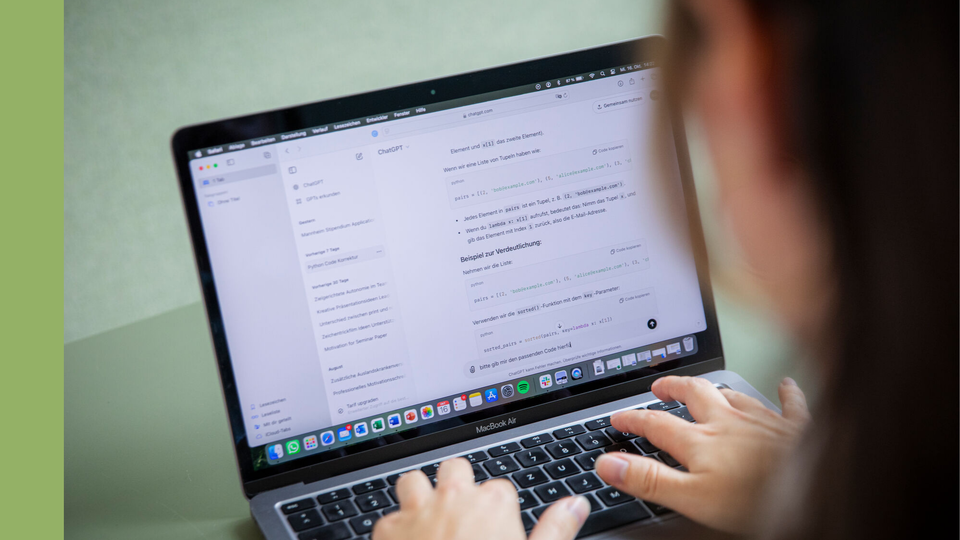
Q‑Summit co‑organizers Konstantin Wadé and Nick Jüttner, both business students, already use AI on a regular basis. ChatGPT helps them structure extensive presentation slides or understand solutions. The goal is not to reduce effort, but to gain clarity and learn more efficiently.
OpenAI sees exactly this as the key benefit. Eva Spannagl, Startup Partnerships Lead at OpenAI, emphasizes that AI enables more personalized learning and helps prepare students early for the workplace. Those who learn how to use AI appropriately gain a clear advantage later on.
Opportunities, Risks – and a Clear Consensus
Studies show just how widespread AI use has become in higher education: nearly 90 percent of students report using AI tools at least for support when writing. At the same time, experts warn of risks such as academic dishonesty, loss of critical thinking, or unequal access to AI tools.
For this reason, AI researcher Thilo Hagendorff advocates for new forms of assessment that better reflect digital realities, such as more oral exams. At the same time, one principle is clear: when AI is used as a tutor rather than a ghostwriter, it can enhance teaching. Academic misconduct involving AI is now clearly regulated and legally classified as a serious form of deception.
AI in Higher Education: A Lived Reality
AI will not disappear from higher education – nor should it. What matters is responsible use. As a learning aid, structuring tool, and digital sparring partner, AI can support students and support everyday academic life. The Q‑Summit makes one thing clear: this development is already a reality.
Learn more:
Read the articles by SWR, Tagesschau, and IT BOLTWISE about OpenAI’s appearance at the Q‑Summit. (Links zu den Artikeln)