
Finance Seminar Thomas Geelen
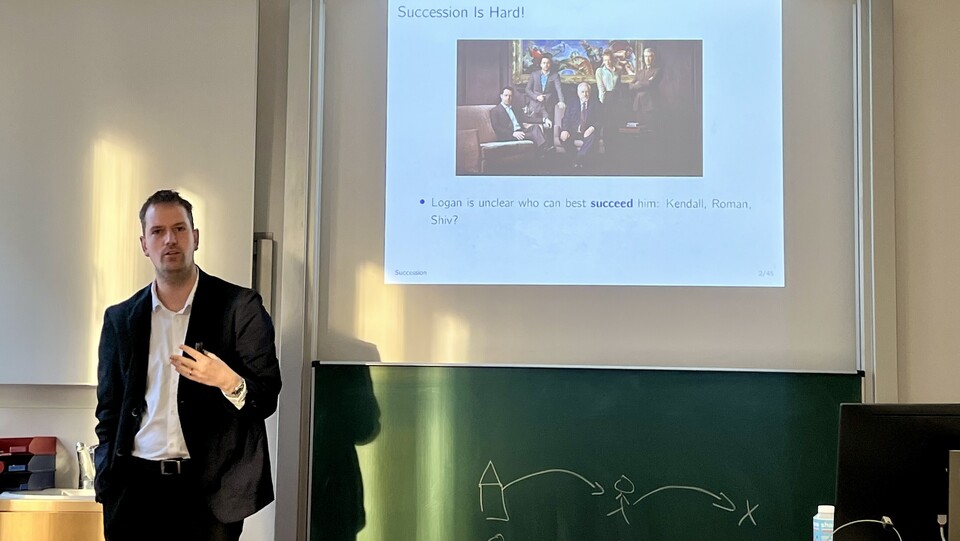
The paper develops a dynamic model of CEO succession, explaining how boards learn about the abilities of both the CEO and the designated successor — and why internal promotions dominate even when external talent is available.
Key insights include:
Internal successions arise naturally because firms constantly learn about successors, treating them like a real option.
Delays and gaps in succession planning can be optimal, not a governance failure — especially when CEO replacement costs are high.
A CEO can sabotage the successor to prolong their tenure, fostering entrenchment — but this can also backfire, making dismissal more likely when boards anticipate such behavior.
Succession planning is a dynamic strategic process — shaped by learning, labor market frictions, and incentives — not just a simple decision between insiders and outsiders.