
Second Life or Recycling? The Real Value of Used EV Batteries
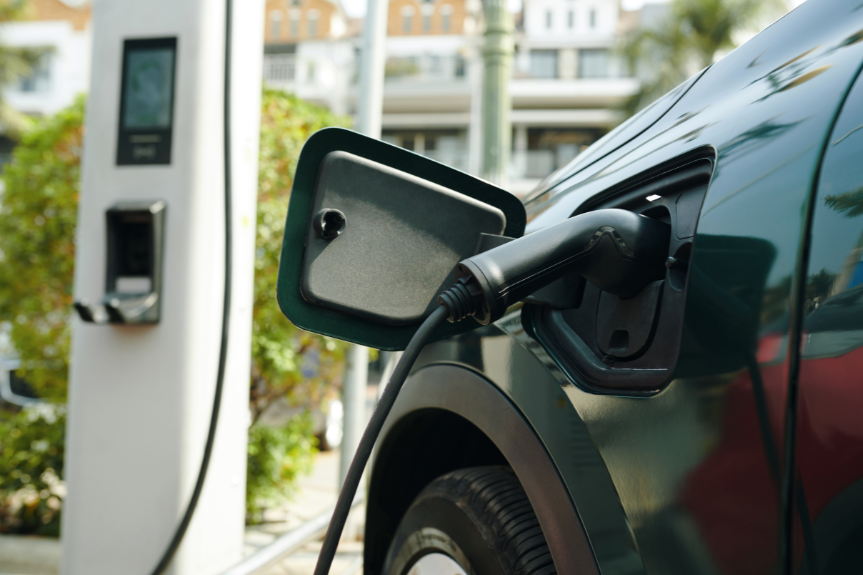
Although EV batteries may no longer meet the performance standards required for mobility, many of them still retain significant energy storage capacity. This leads to an important economic and sustainability dilemma: should these batteries be repurposed for a second life, or should they be recycled immediately?
The answer has major implications. It affects companies' investment decisions, the economic factors of the energy transition, and the credibility of circular economy strategies.
A growing market for used capacity
Electric vehicle batteries are a good example of assets that often retain significant functional capacity after their first use. As global adoption of EVs accelerates, large quantities of used batteries are entering the market. At the same time, demand is rising for stationary energy storage, such as grid stabilization and renewable energy buffering.
At first glance, second-life applications appear to be a win-win situation: they extend the life of assets, reduce waste, and support sustainability goals. But whether repurposing truly creates value depends on more than just good intentions.
The value of batteries for a second life: an economic perspective
In the recent study 'Fair Market Value of Used Capacity Assets: Forecasts for Repurposed Electric Vehicle Batteries,' researchers Dr. Amadeus Bach and Prof. Stefan Reichelstein, from the Mannheim Institute of Sustainable Energy Studies (MISES), along with Stanford researchers Prof. Simona Onori and Jihan Zhuang, developed an analytic general economic valuation model to answer this question.
The model takes into account important factors, including:
- Technological advances in battery performance
- Capacity loss over time
- Repurposing costs
- The residual value of recycled materials
The authors apply this framework to two commonly used types of lithium-ion batteries:
- LFP batteries (lithium-iron-phosphate)
- NCX batteries (nickel, cobalt and X)
One size does not fit all
The results challenge the idea that all used EV batteries should automatically be given a second life.
The analysis shows that LFP batteries are consistently suitable for second-life applications. Thanks to their relatively stable chemical composition, longer lifespan, and lower recycling value, repurposing is economically attractive in many scenarios.
NCX batteries, on the other hand, are often better off being recycled immediately. Although they may still have some remaining capacity, their high material value — due to nickel and cobalt — and the limited number of economically viable remaining cycles make recycling often more appealing than repurposing.
In short, the economically optimal circular strategy depends on the battery's chemical composition.
Implications for companies and policymakers
For companies, the findings offer clear guidelines:
- Targeted choices increase value creation: By differentiating repurposing and recycling per battery type, companies can better combine circularity goals with economic rationality.
- Design choices determine circularity: Weight-optimized or structurally integrated batteries increase efficiency during initial use, but can make repurposing more technically complex and expensive.
Hence, decisions made in the design phase have lasting consequences for the feasibility and costs of repurposing, thereby influencing circularity over the entire life cycle.
Rethinking the circular economy
The broader lesson extends beyond batteries. Circular economy strategies must be based on economic reality. Extending the life of an asset is not automatically sustainable if the costs outweigh the benefits or if valuable materials are stored inefficiently.
The key question is not whether repurposing is possible, but when repurposing truly creates value.
Further Readings:
- You can read the full research article here.
- Research by the same authors on this topic.
- Learn more about the Mannheim Institute of Sustainable Energy Studies (MISES) and its ongoing research on the challenges and innovation opportunities that emerge from the transition to a decarbonized energy future.